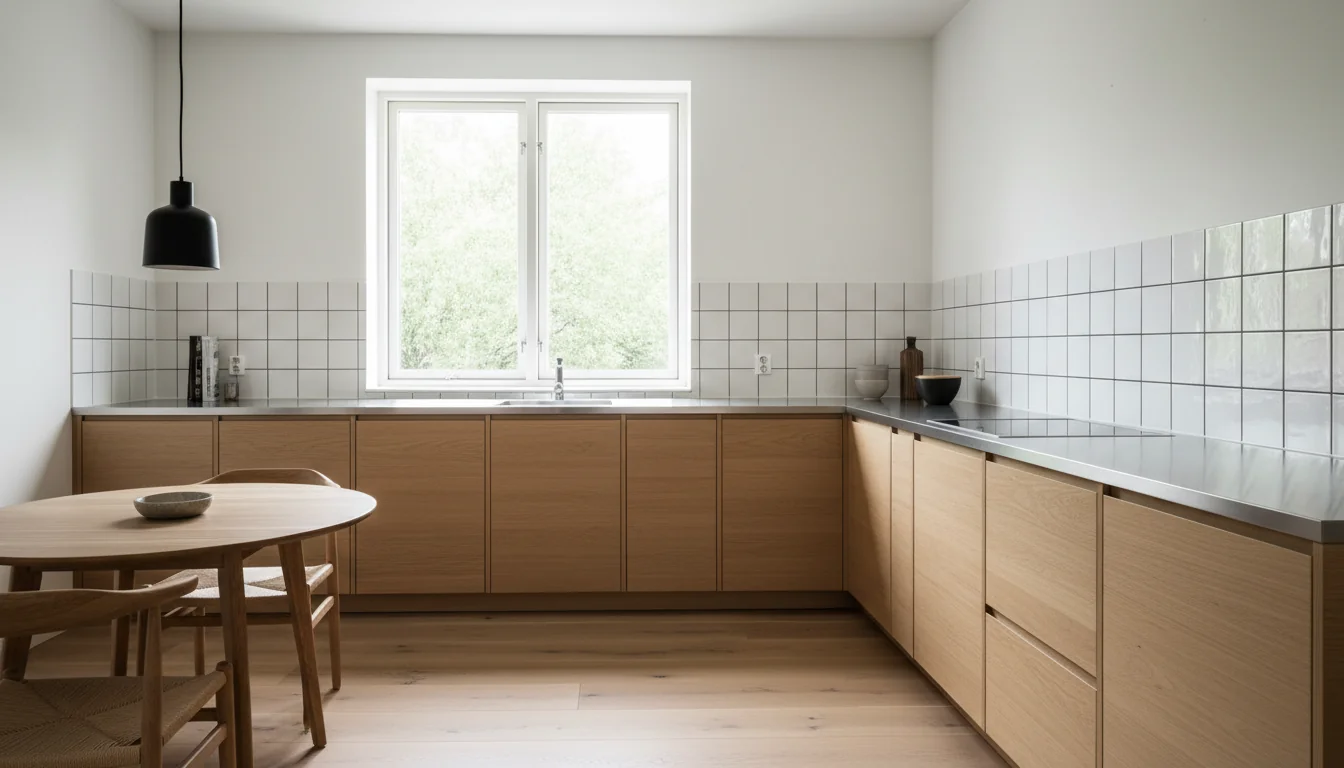
What makes a kitchen material sustainable
Definition of a sustainable, eco-friendly and hard-wearing material
A sustainable material for a kitchen is a material built to last, with a low impact on the environment and requiring little maintenance. Sturdiness alone isn’t enough, recyclability and ecological footprint matter just as much.
Bamboo, valued for its fast growth, robustness and workability, or granite, a highly resistant natural stone, are safe picks for worktops.
A sustainable material resists moisture, heat and impacts, has a low environmental footprint across its whole cycle (production, transport, recycling), needs little upkeep and holds up over time.
Solid wood, polished concrete, tempered glass and stainless steel combine aesthetics, robustness and respect for the environment.
Why prioritise durability in a kitchen renovation
The kitchen is a central part of daily life. Sustainable materials cut down on how often you renovate, along with the related costs.
They also limit environmental impact (less waste, fewer replacements, lower energy use), a win that is both ecological and economical.
Durability also means safety. A quality composite worktop doesn’t crack easily; a well-designed polypropylene cabinet keeps its shape over time.
A coherent choice within a responsible approach. If you have a kitchen renovation project in Geneva and the surrounding area, get in touch with Class Orga.
Eco-friendly materials for worktops
Solid wood and reclaimed wood, warmth and eco-responsibility
Solid wood brings a warm, natural touch to the kitchen. Well maintained, it lasts for decades. Oak, beech and walnut are among the most used species.
Reclaimed wood is a more eco-friendly alternative, making use of resources already extracted and keeping the natural charm of wood with a reduced footprint.
These surfaces need regular oiling or varnishing against moisture and stains. They suit fans of living materials and authentic style.
Quartz and engineered stones, durability and aesthetics
Quartz is a composite material made of natural stone and resin. It is non-porous, easy to clean, resistant to heat and impacts.
Engineered stones mimic granite or marble with a consistent colour and texture, at a more accessible price.
They suit kitchens with a refined design and offer a responsible alternative to quarrying massive blocks of natural stone.
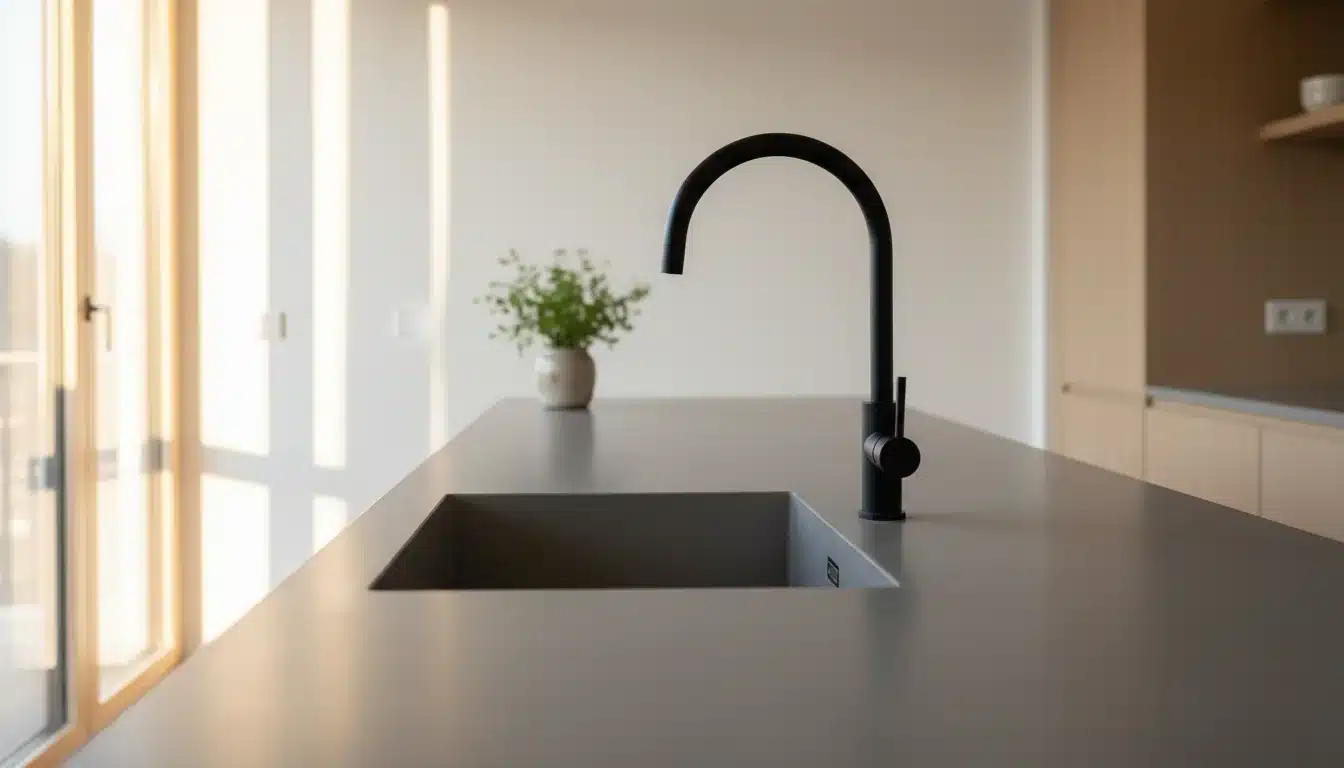
Polished concrete, a trendy mineral choice
Much loved for its raw, industrial look, polished concrete is also customisable in texture and colour.
This mineral material is hard-wearing and long-lasting, though a water-repellent treatment is needed to prevent water or grease absorption. Made from cement, sand and pigments, it remains more eco-friendly than most synthetics.
Great for modern kitchens with a clean, minimal style.
HPL and Fenix laminates, innovative and affordable options
HPL laminate is an economical solution that mimics premium materials. It is practical, lightweight and easy to look after.
Fenix, at the higher end, offers a matte, anti-fingerprint surface, soft to the touch and heat-repairable. Made with cured acrylic resins, it is particularly hard-wearing.
Which materials to pick for cabinet fronts
Eco-certified MDF, an economical and long-lasting option
MDF (medium-density fibreboard) is often used for cabinet fronts. Easy to work with, it can be painted or veneered for an attractive kitchen on a controlled budget.
Go for low-formaldehyde MDF, better for health and the environment.
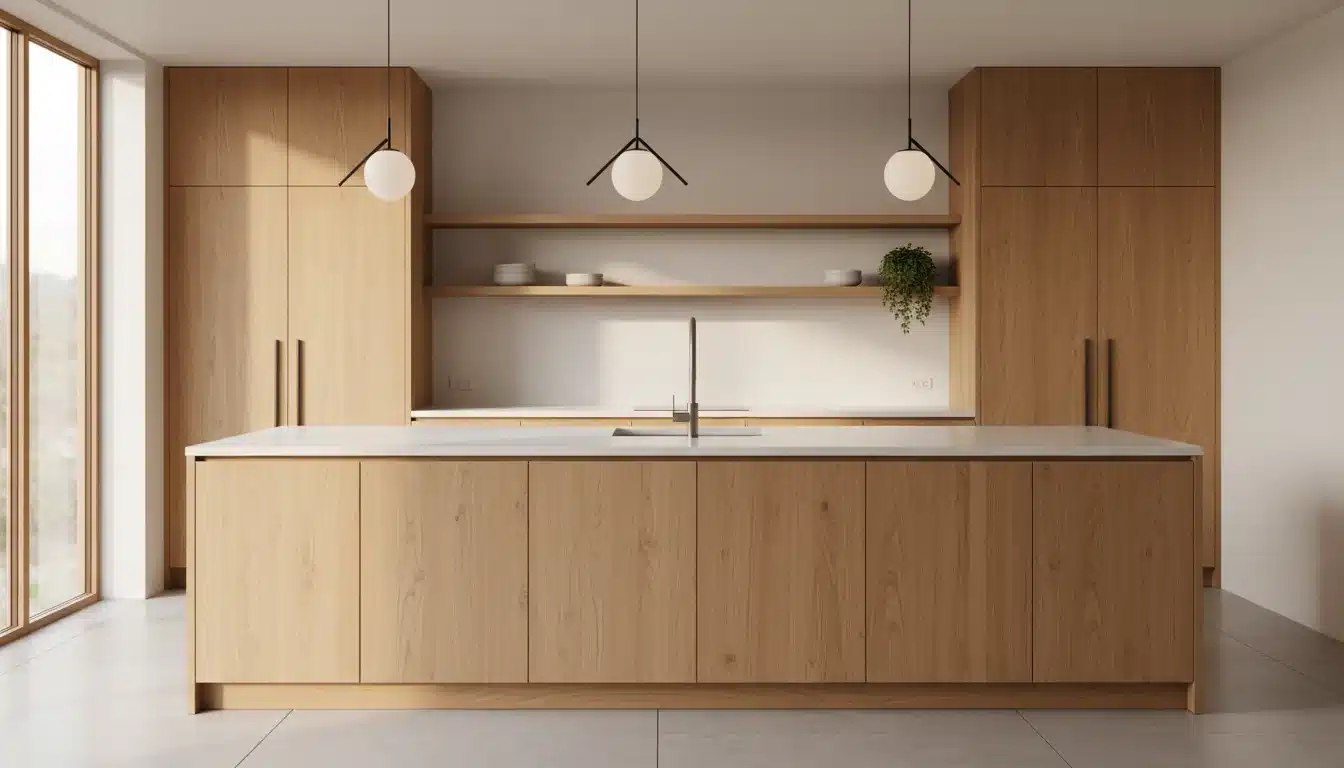
Natural or reclaimed wood fronts, charm and longevity
Natural wood brings a warm, authentic atmosphere. Species such as oak, beech or walnut ensure robustness and durability.
Reclaimed wood gives a second life to older materials. Each piece is unique, with its own grain and character.
These materials demand a bit more upkeep, but well protected with a natural varnish, they keep their beauty against moisture and stains.
Eco-friendly finishes, VOC-free paints and natural varnishes
The finish matters as much as the material. For a sustainable kitchen, avoid products that contain solvents and go for VOC-free paints (volatile organic compounds) and natural varnishes based on linseed oil or beeswax.
These treatments are healthier, extend the lifespan of wood and give a more authentic look, a great fit for a natural feel.
Which materials to choose for the sink and splashback
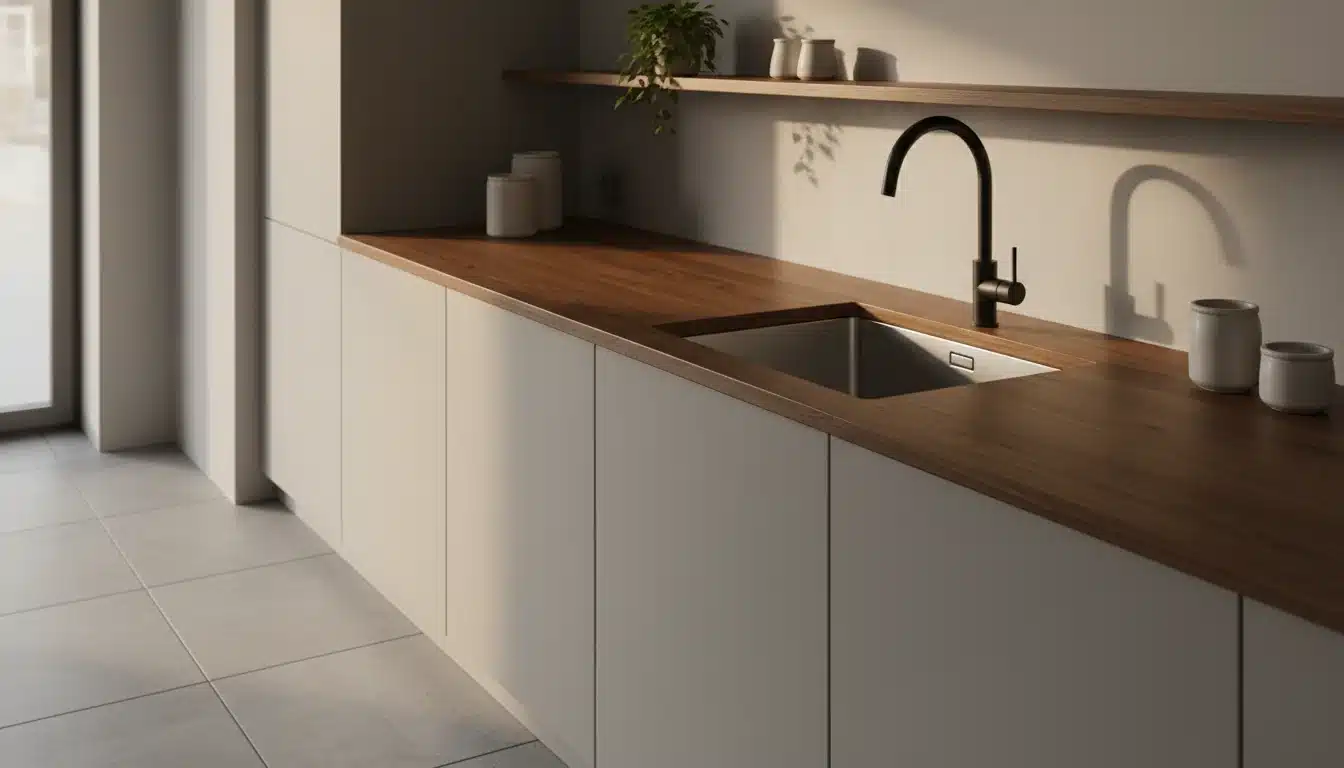
Recycled stainless steel, hygiene and strength for heavy use
Recycled stainless steel is the top pick for sinks. Hard-wearing, it fears neither heat nor impacts, does not hold bacteria, and a simple wipe keeps it in shape.
Fully recyclable, it is a responsible choice that fits every kitchen style.
Tempered glass and ceramic, two long-lasting options
Tempered glass, a great fit for splashbacks, resists heat and scratches. It cleans easily and adds a modern touch.
Ceramic stands up well to water and cleaning products. It is long-lasting and keeps its look over time.
Both materials combine aesthetics, easy upkeep and longevity, while respecting the environment.
Splashbacks in natural or composite materials, aesthetics and practicality
Splashbacks in oiled wood, bamboo or granite bring style but demand a little more care and protection against moisture and heat.
Composites, such as high-pressure laminate or resins, are simpler to live with. They mimic natural materials, are hard-wearing, easy to fit, and some are recyclable.
They balance design and function across a range of budgets.
Sustainable materials compared, cost, maintenance and lifespan
Comparison table of the main eco-friendly materials
Here is a comparison of the sustainable materials most used in kitchens based on their cost, their upkeep and their longevity.