Across 45 years of jobsites in Geneva, we have seen every kind of project, and one observation keeps coming back: project failures are almost never technical. They are organisational. A wall built before the cables go through. A waterproofing layer laid before a pressure test. A parquet floor delivered the day before a water damage incident. These textbook problems are always the symptom of the same root cause, the way the project is being run.
Before discussing materials, insulation or interior layout, the first question for any owner should be very different from the one usually asked. Not “who builds?”, but “who runs the project?”. General contractor, total contractor, project management assistance (AMO), site execution assistance (AME), architect: each has its own scope, its own contract, its own responsibility perimeter.
Here is how we distinguish them at Class Orga, what each format actually covers, and the pilot mode we recommend depending on the nature of the project.
Why project management decides everything
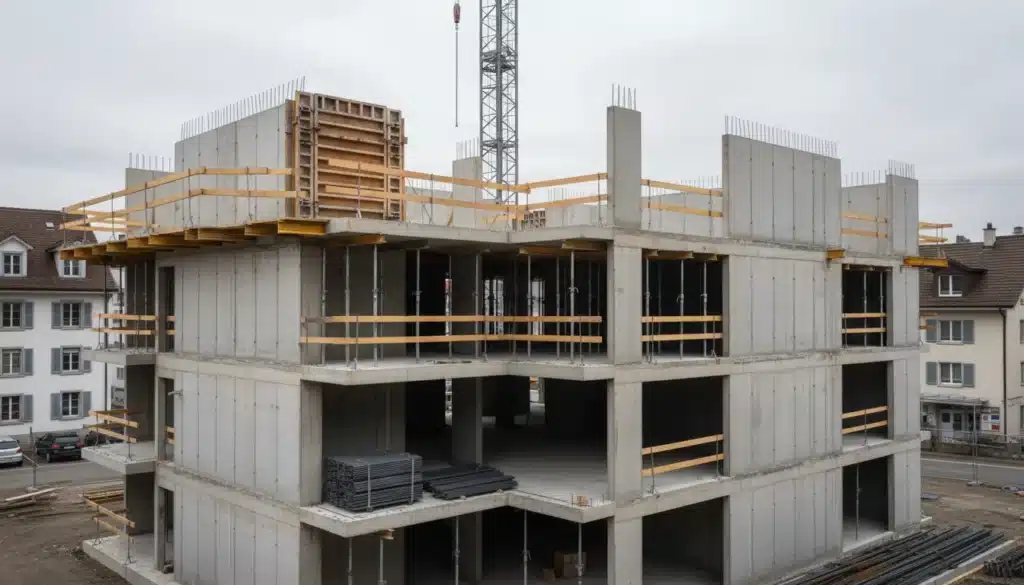
A heavy renovation in Geneva involves between fifteen and thirty trades. A new build often exceeds forty. Masonry, waterproofing, electrical, plumbing, HVAC, drywall and painting, flooring, joinery, kitchen, elevator, landscaping: each comes in with its own lead times, storage constraints, tests to pass, and specific standards.
The Swiss Society of Engineers and Architects (SIA) structured this coordination in two landmark norms, SIA 102 for architects and SIA 103 for civil engineers. These texts define six phases (pre-design, design, tendering, detailed design, execution, commissioning) with a precise allocation of responsibilities at each step.
On paper, everything looks clean. In real life, every owner has to decide who takes the pilot seat on their own jobsite. And that single decision determines who talks to the contractors, who carries the risk, and who is answerable for the final result.
Centralised piloting or fragmented piloting
Two families of models coexist. Fragmented piloting relies on an architect who designs and supervises, individual contractors executing in separate lots, and an owner who carries the interface risk. Centralised piloting groups responsibility in a single hand, either via a general or total contractor, or via an owner project management and site execution assistance mission handed to an independent third party.
The more complex the project, the more centralised piloting becomes a real asset. Not by ideology, by mechanics. The number of interfaces between trades grows in the square of the number of trades involved. At ten trades, you have forty-five interfaces. At twenty, you have one hundred ninety. The hidden cost of piloting explodes with size.
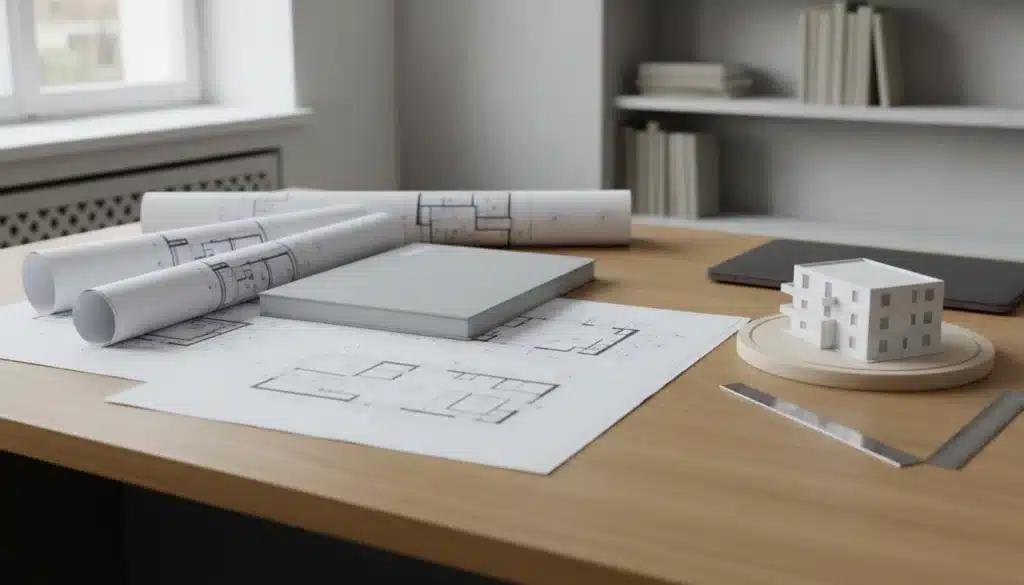
The architect and design supervision
The architect designs. The base mission, as defined by SIA 102, runs from the program to the handover. The architect draws, prepares the building permit application under the LCI (Geneva law on constructions and installations), runs the bid process and supervises execution. The architect is the author of the project and the aesthetic guardian.
Design supervision is the extension of that mission into the daily life of the jobsite. The architect or a specialised mandate validates technical sheets, signs purchase orders, arbitrates differences in plan interpretation, and tracks progress.
What the architect does not cover
Three blind spots recur in pure architecture missions. The first is financial risk. Contract signatures remain with the owner, not the architect. If a contractor goes bankrupt mid-job, the owner has to find a replacement and absorb the gap. The second is the fine daily coordination of intervention schedules, which requires a permanent site presence rarely included in a standard architect mission. The third is the management of post-handover construction warranties, which is done in cascade with each contractor and weighs on follow-up for two to five years after delivery.
This format suits projects where the design gesture matters more than the deadline, or public clients used to multi-lot tendering. It is less suited to a private owner who wants a single contact and a single point of responsibility.
The general contractor: one contract, one schedule, one responsibility
This is one of the two main formats we have operated at Class Orga for 45 years, and probably the best known. The general contractor takes charge of the execution phase. Bid process to specialised trades, contracting, execution, quality control, handover. They sign a single contract with the owner and carry the financial risk of execution. If a subcontractor defaults, the general contractor replaces them, at their own cost.
In the classic setup, the owner signs the architectural project with their architect, then hands execution to a general contractor. Two main interlocutors, two contracts, but a single person to call when the jobsite slips.
The model covers SIA phases 4 and 5 (detailed design and execution) with a detailed schedule, a contractual budget, clear late penalties, and a single handover. The complexity of interfaces between trades is handled behind the curtain. That is on us, not on the client.
When the general contractor changes the game
Three situations make this mode particularly useful.
- A Geneva apartment renovation in a condominium, where coordination with the management company and neighbours is sensitive. A management company always prefers one professional point of contact over seven craftsmen calling in parallel.
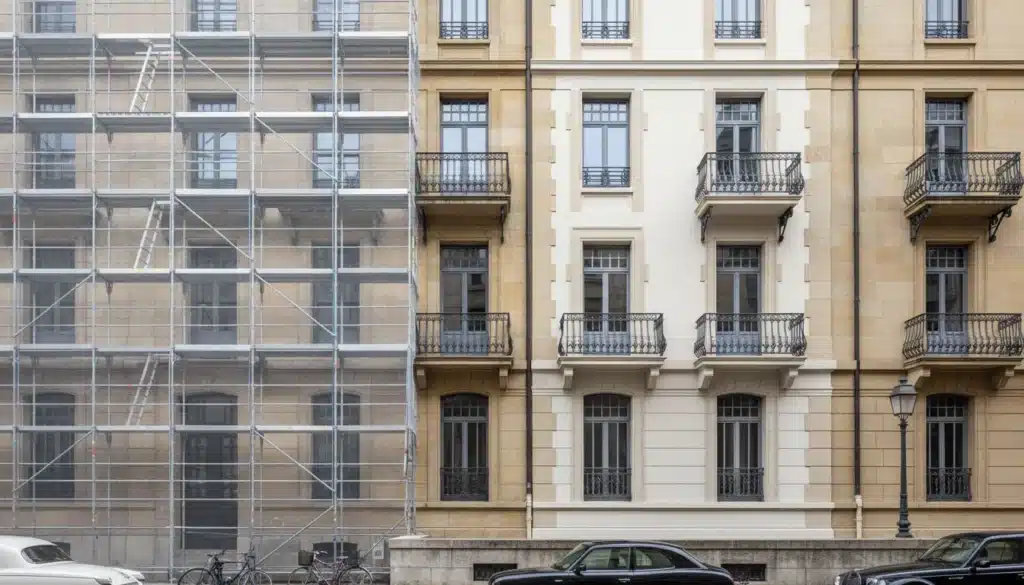
- A jobsite in a protected zone, where compliance with the Law on demolitions, transformations and renovations (LDTR) requires rigorous administrative tracking and constant justifications to the Cantonal Office of Housing and Land Planning (OCLPF).
- A project with a hard deadline, for example a renovation tied to a sale or move-in date. A contractual late penalty beats a verbal promise.
The total contractor: the most integrated format
This is the second format we operate at Class Orga, and one increasingly in demand. The total contractor covers more than the general contractor. It includes design, not just execution. The owner signs a single turnkey contract, from first sketches to handing over the keys.
The scope covers architecture, engineering studies, the LCI building permit filing, the tender process, execution and delivery. The client deals with a single entity throughout the project.
Benefits and limits of turnkey
The benefit fits in one sentence. Full budget visibility from signature, and a single responsible party from design to delivery. It is the simplest format for an owner who does not want to pilot.
The limit also fits in one sentence. Design is done by the entity that executes, which can limit architectural freedom and creative dialogue. On a project where the owner’s personal expression matters as much as performance, the independent architect keeps its value.
At Class Orga, we recommend this format for private house construction projects, for rental building investors, and for projects with hard deadline constraints.
AMO, your voice in front of the contractors
Project management assistance is probably the least known format with the general public, and yet the most precious one for an owner who is not a construction specialist. AMO does not design, does not lay a single screw, does not sign with contractors. It accompanies the owner in their decisions and defends their interests at every milestone.
The typical scope covers help defining the program (how many rooms, what level of finish, what target budget), bid analysis, monthly budget tracking, arbitration in case of disagreement with a mandate, critical reading of amendments, and defending the owner’s interests in front of the general contractor or the architect.
On a complex jobsite, AMO is the equivalent of a business lawyer. You hope to never need one, but when a dispute arises, the gap between having one and not having one is incomparable with its fees.
When AMO becomes almost mandatory
Three cases almost always justify it.
- A project worth several million francs, where the AMO fee ratio to total budget remains marginal.
- A non-technical owner who wants to understand what they sign before each payment milestone.
- A renovation under LDTR with post-works rent constraints. Room-by-room cost control becomes a management obligation, not a comfort.
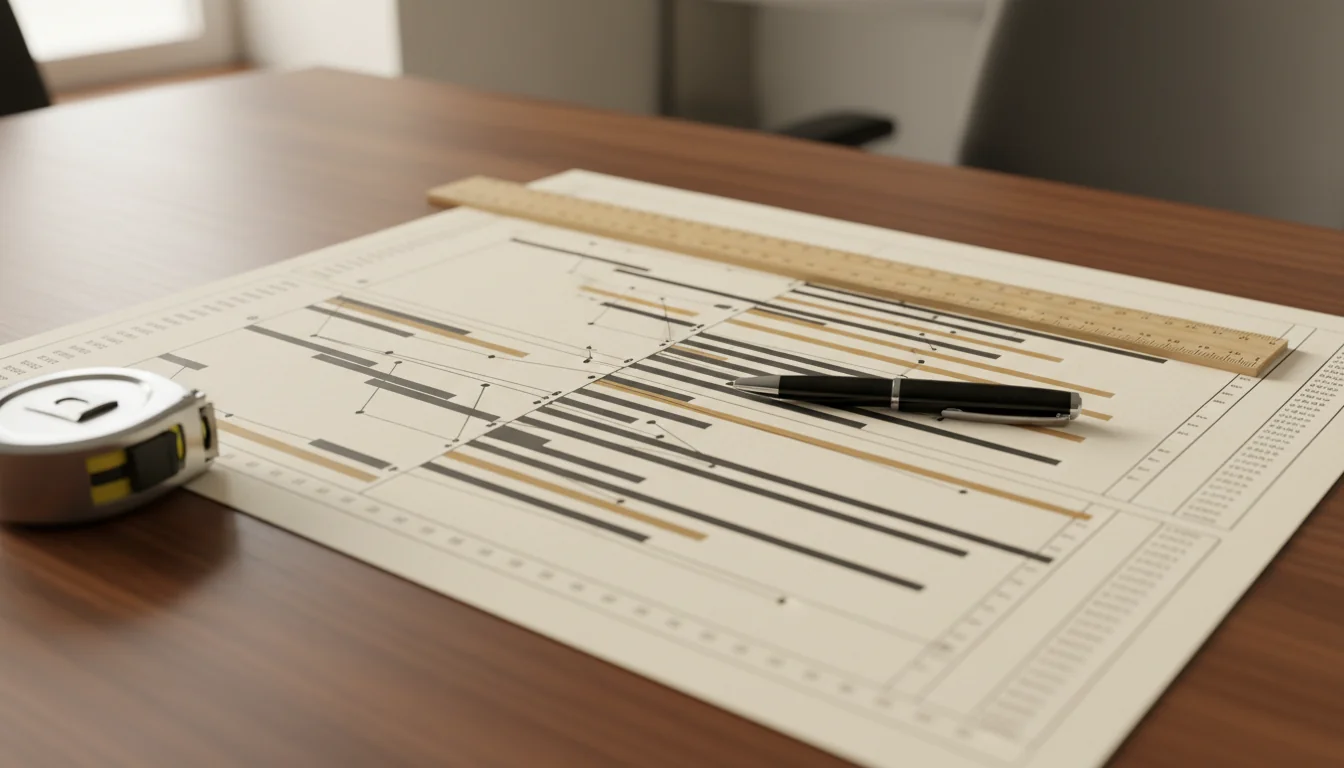
AME, the daily conductor of the jobsite
Site execution assistance is the field counterpart of AMO. If AMO defends the owner at the negotiation table, AME defends them on the jobsite.
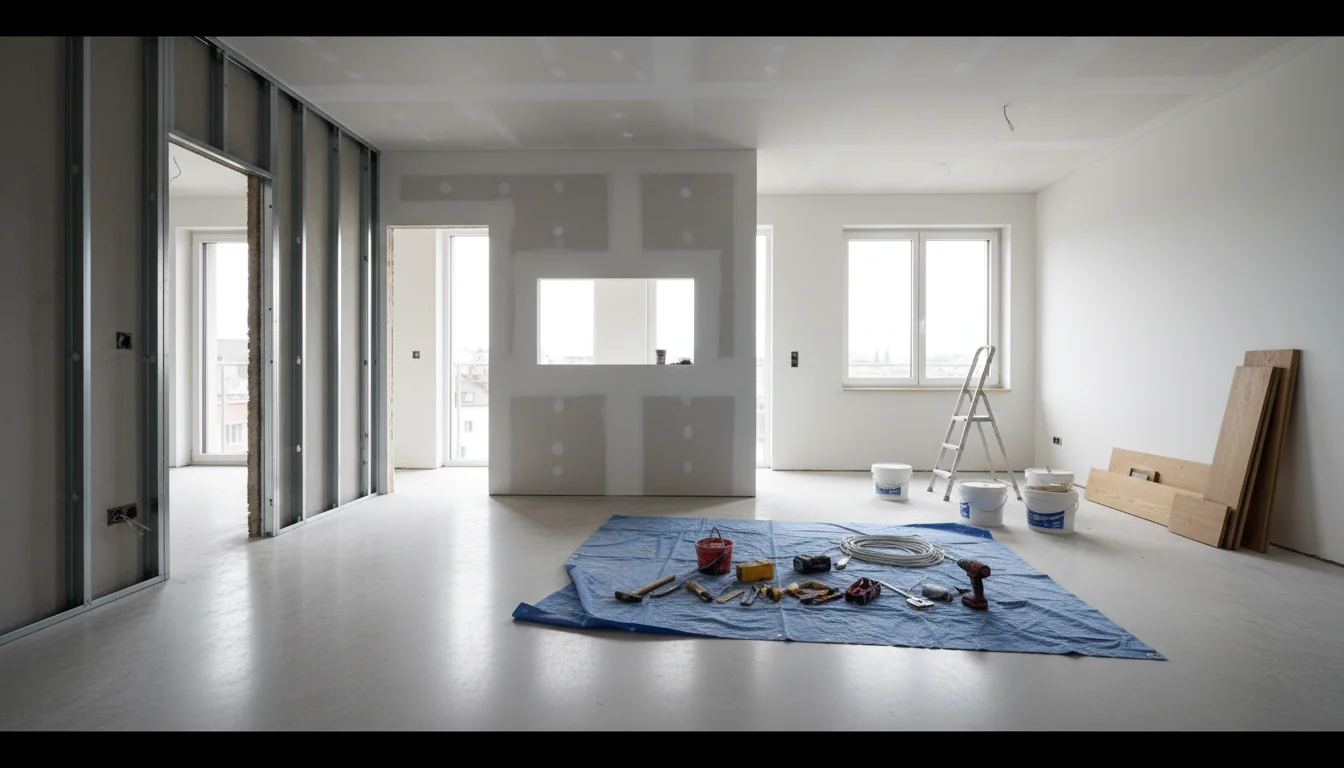
Its mission covers daily coordination of trades, quality control at the moment of installation (not just at handover), fine schedule management, the running of tests and commissioning of technical installations, the handover itself, and the follow-up of reservation closures. AME is the one walking the site every morning, spotting the misaligned anchors and having them redone before the partition is closed. It is also the one preventing disputes between craftsmen before they turn into change orders.
Why AMO and AME often combine
The two missions are complementary. AMO covers decision and contract. AME covers execution and field control. Many experienced owners combine both, especially when the jobsite mixes several technical trades with high risk such as an energy envelope intervention or a heating system replacement under the MoPEC 2014 (Cantonal Energy Prescription Model). On that last point, an early look from a Geneva CECB expert radically changes the rest of the operations.
Which mode to choose for your project
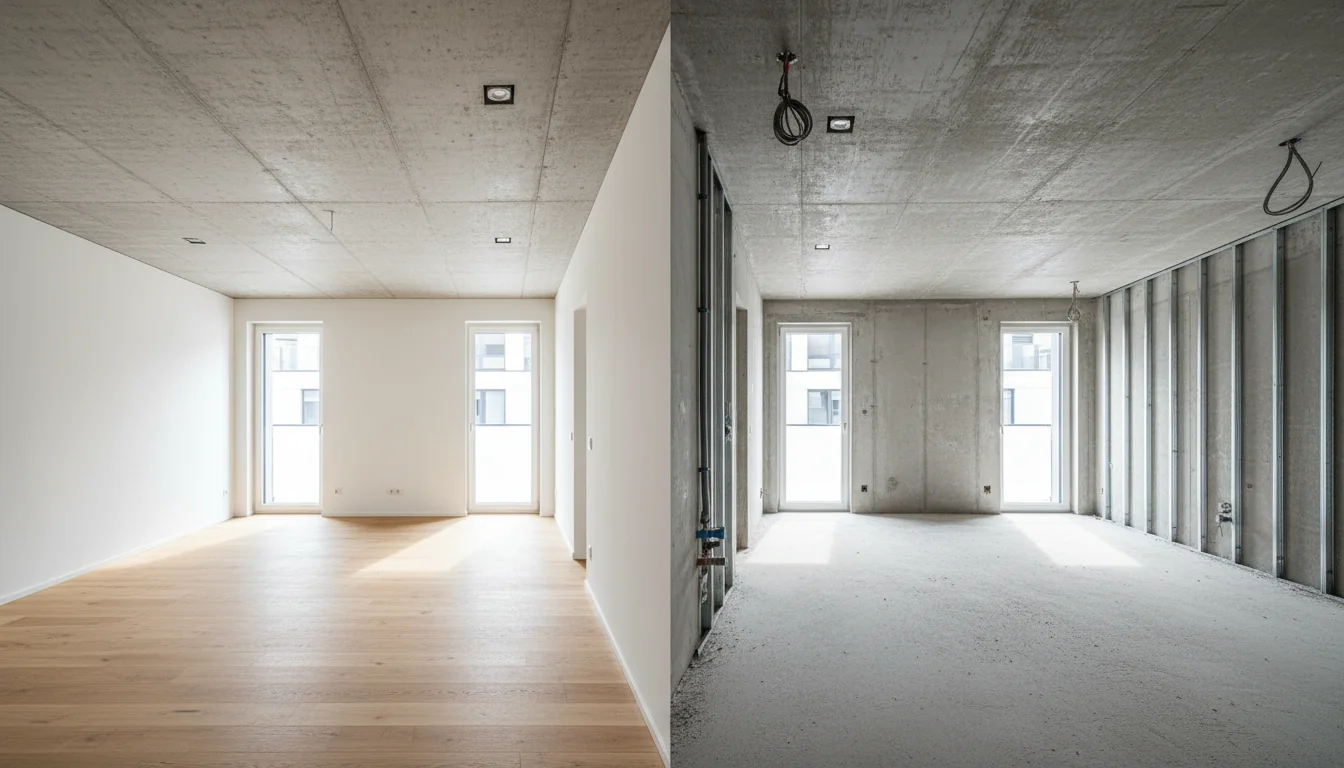
A clarification before the table. At Class Orga, we are both general contractor and total contractor. Depending on the nature of the project and the level of involvement the client wants, we switch from one to the other, and complete with an AMO or AME mission when needed. The table below summarises our recommendations by project typology.
| Project type | Recommended format | Why |
|---|---|---|
| PPE apartment renovation under 200,000 CHF | All-trades coordination with a dedicated coordinator | Light on contract, enough if no load-bearing walls or heavy technical installations |
| PPE apartment renovation above 200,000 CHF | General contractor | The management company and neighbours prefer a single professional point of contact |
| Full house renovation | Architect + general contractor, OR total contractor | Keep the architect if strong aesthetic vision. Go total contractor if you want certainty on cost and date |
| Building a private house | Total contractor | Maximum contractual safety and budget readability |
| Rental building construction | Total contractor or general contractor | Except for very seasoned investors piloting in separate lots |
| Office or professional fit-out under 800 m² | All-trades coordination | Light format, suited to quick execution |
| Office fit-out above 800 m² | General contractor | Stronger contractual guarantees and penalties |
| Multi-million CHF project or sensitive LDTR context | Add AMO and AME | Owner interest defence in parallel to execution |
The right reflexes before signing
Whatever the chosen format, three reflexes always apply. First, check who carries the professional liability insurance and up to what amount. Second, read the completion guarantee and late penalty clauses. Third, ask for a detailed schedule phased in weeks, not months, with client validation points clearly identified.
At Class Orga, we accept every format. We act as general contractor, total contractor, in AMO or AME missions, in simple all-trades coordination, or alongside an independent architect appointed by the client. The format matters less than the contract clarity and the schedule solidity. Our experience has taught us that a project quality is always decided at signature, never at the end.
If you have a construction or renovation project in Geneva and you hesitate on the right piloting mode, we can discuss it in a few minutes by phone and give you our honest read of the situation.