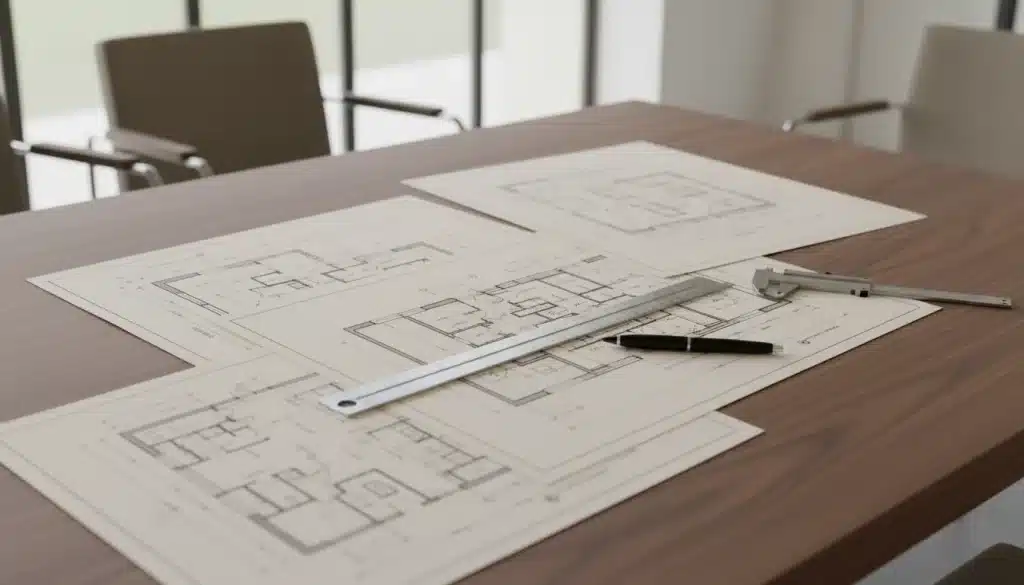
Are you planning to renovate your property in Geneva? Watch out, the rules are strict. Between permits, energy standards and legal obligations, a single mistake can lead to sanctions, or even a site stop.
Which works need a permit? What are the requirements regarding insulation or accessibility? How to avoid administrative pitfalls?
This article guides you through the regulations to follow for a smooth renovation.
Understanding the main laws governing renovation in Geneva
The Act on demolitions, conversions and renovations (LDTR)
The LDTR governs renovation works, conversions and demolitions of buildings. Its main goal is to protect the existing housing stock and avoid property speculation.
Before starting works, you should check whether a building permit is required. This cantonal law imposes strict rules:
- Obligation to obtain an authorisation for any conversion affecting the use of a dwelling.
- Ban on removing dwellings without compensation.
- Framework for renovations to avoid abusive rent increases.
The Urban Planning Service of the Canton of Geneva oversees compliance with these rules. For example, if an owner wants to convert a residential building into offices, they must prove that it does not harm the housing supply.
The Energy Act (LEn)
The LEn aims to improve the energy efficiency of buildings and support sustainable renovation. It imposes requirements on insulation, heating and the use of renewable energy sources.
The main obligations include:
- Compliance with insulation standards to reduce energy consumption.
- Ban on oil heating in new constructions.
- Obligation to install solar panels on certain renovated buildings.
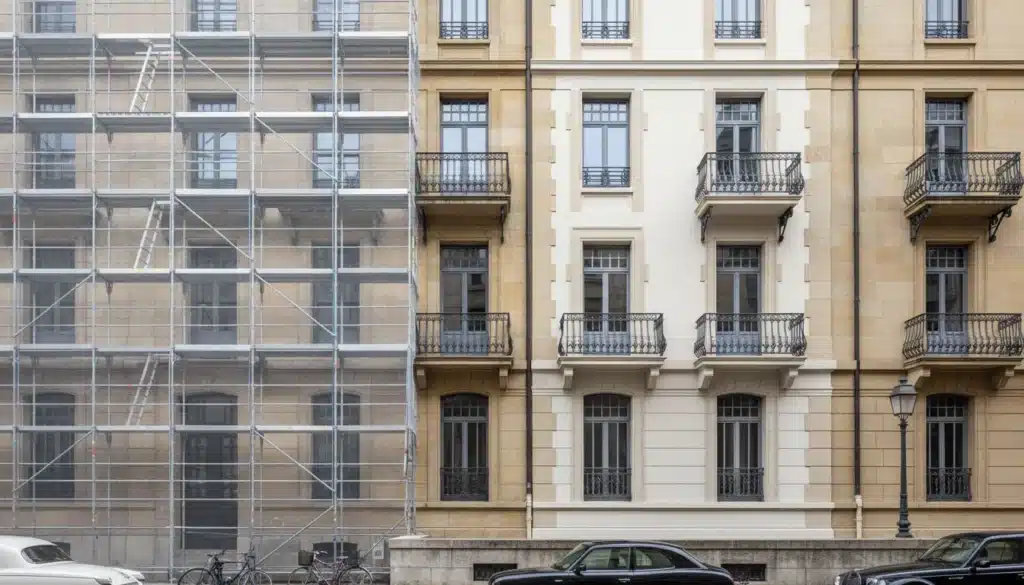
An owner who renovates a façade must ensure that the thermal insulation complies with the standards applicable to buildings and various installations. Subsidies exist to encourage these improvement works.
Before starting works, it is recommended to consult an expert in energy planning such as Class Orga to ensure compliance with legal requirements.
Administrative steps to obtain permits and authorisations
Any renovation must comply with strict rules. Before starting works, the required authorisations must be obtained from the dedicated services.
When is a building permit required?
A building permit is mandatory to:
- Modify the structure of a building (load-bearing walls, façades, roof).
- Change the use of a space (example: converting a garage into housing).
- Carry out extension works.
- Modify the external appearance of a building (windows, balconies, façades).
For minor works, a simple authorisation may be enough. It is advised to check with the dedicated Service.
Steps to obtain a permit
The application for a building permit follows several steps:
1. Preparing the file: plans, description of works, environmental impact, data gathering and authorisations as needed from the dedicated bodies.
2. Submitting the application to the State Service.
3. Review and consultation: checking compliance with urban planning standards and safety rules with the various bodies.
4. Publication: public posting of the project to allow potential objections.
5. Decision: approval or refusal of the permit.
Timelines and costs
Timelines vary depending on project complexity:
Type of works
Average timeline*
Estimated cost*
Small renovations (on average)
1 to 3 months
A few thousand francs
Structural modifications
3 to 9 months
Several thousand francs
Complex projects
6 months and more
Varies with scope
*This information is provided for guidance only, without commitment.

Obligations after obtaining the permit
Once the permit is granted, certain obligations must be met:
- Follow the authorisation file
- Inform the authorities in case of change.
- Comply with safety and insulation standards.
- Allow public services to inspect at any time.
Failing to meet these obligations can lead to sanctions, or even a stop to the works.
Mandatory energy and environmental standards
In the cantons, any renovation must comply with strict rules on energy and environment. These requirements aim to improve insulation, reduce energy consumption and limit buildings’ environmental impact.

Meeting the requirements for buildings and various installations
The Act on buildings and various installations (LCI) sets precise criteria to ensure the energy efficiency of buildings. Any change to a façade, window replacement or roof renovation must meet current standards.
- New windows must have a strong thermal coefficient.
- Renovated roofs must be insulated to the standards in force.
- Obsolete heating systems must be replaced with more sustainable solutions.

Use of renewable energy
The latest regulations encourage the installation of solar panels or other renewable energy sources. For any major renovation, integrating these technologies may be mandatory. By 2035, current buildings will likely have to integrate a solar installation. The cantonal Climate Plan targets a 60% reduction in greenhouse gas emissions by 2030 and carbon neutrality by 2050.
A few obligations:
- Installation of solar panels on roofs whenever technically possible.
- Replacement of oil-fired boilers with more ecological systems.
- Improved energy efficiency of older buildings.
Energy improvement obligations
As an example, the Canton of Geneva imposes measures to reduce the energy consumption of existing buildings in line with current standards.
If you redo a building’s façade, you must improve its thermal insulation. Likewise, replacing a heating system should favour low-impact solutions, such as heat pumps or district heating.

Waste management and sustainable materials
During renovation works, the management of construction waste is regulated. Materials must be sorted and recycled as much as possible. In addition, the use of sustainable and low-carbon materials is encouraged.
The Geneva authorities require:
- Sorting and recycling of rubble and other waste.
- The use of eco-friendly materials for certain renovations.
- A reduction in environmental nuisance during the works.

Checks and inspections
The authorities carry out checks to verify compliance with energy and environmental standards. Inspections can take place before, during and after the works.
If a project doesn’t comply with the regulations, adjustments may be required or sanctions applied.
Accessibility and safety requirements
Any renovation site must comply with strict rules on accessibility and safety. These requirements ensure that buildings are suitable for everyone and meet the standards for protection against risks.

Accessibility for people with reduced mobility
The Regulation on the accessibility of buildings and various installations (RACI) imposes rules to make buildings accessible to people with disabilities. This covers:
- Building entrances
- Lifts
- Sanitary facilities
- Ramps and handrails
These obligations apply to public buildings and collective housing. An inspection may be requested to verify compliance.
Fire safety standards
Fire safety is a priority. The authorities (Fire Police) impose strict rules:
- Use of fire-resistant materials.
- Evacuation plan
- Installation of a fire system
Before obtaining a building permit, a compliance study is often required.
Stability and strength of structures
Buildings must be safe and sturdy. Any renovation involving structural changes must comply with:
- Calculation of loads borne by walls and floors.
- Strengthening of foundations if needed.
- Compliance with current standards.
A civil engineer may be required to validate the works.
Ventilation
A well-ventilated and well-lit building improves comfort and safety. Requirements include:
- Sufficient ventilation to prevent moisture and mould.
- Ventilation systems in kitchens and bathrooms.
These rules ensure a healthy environment that complies with current standards.
Legal implications in case of non-compliance with regulations
Failing to comply with regulations can lead to severe sanctions. Whether it is the absence of a building permit, a breach of safety standards or non-compliance with the zoning plan in the city of Geneva, the consequences can be heavy.
Administrative sanctions
The authorities of the Canton of Geneva can impose several sanctions in case of an offence:
- Fines: depending on the severity of the offence, they can reach several thousand Swiss francs.
- Site stop: a non-compliant site can be suspended immediately.
- Obligation to bring into compliance: owners must correct irregularities at their own expense.
Legal consequences
If a renovation doesn’t meet urban planning standards, legal proceedings may be initiated. This can include:
- Disputes with neighbours or the municipality.
- Obligations to demolish if the construction is illegal.
- Registration in the offence registry, complicating any future property sales.
Cantonal financial support and subsidies for a compliant renovation
Undertaking a renovation in Geneva requires complying with strict regulations. Fortunately, several financial aids exist to ease the costs. These subsidies support works that improve insulation, reduce energy consumption and ensure compliance with current standards.

Cantonal subsidies
The Canton of Geneva offers support for renovations that meet the LCI requirements. These subsidies cover:
- Thermal insulation works (walls, roofs, windows).
- Replacement of heating systems with more eco-friendly solutions.
- Installation of solar panels for sustainable energy production.
To benefit from them, you need to submit a file to the authorities. This file must prove that the works meet environmental standards and improve the building’s energy efficiency.
Class Orga supports you throughout the administrative steps with the authorities for your renovation in Geneva. Don’t hesitate to call on our experts to save time and peace of mind.