Understanding the role of break areas in employee mental recovery
What is a workplace break area?
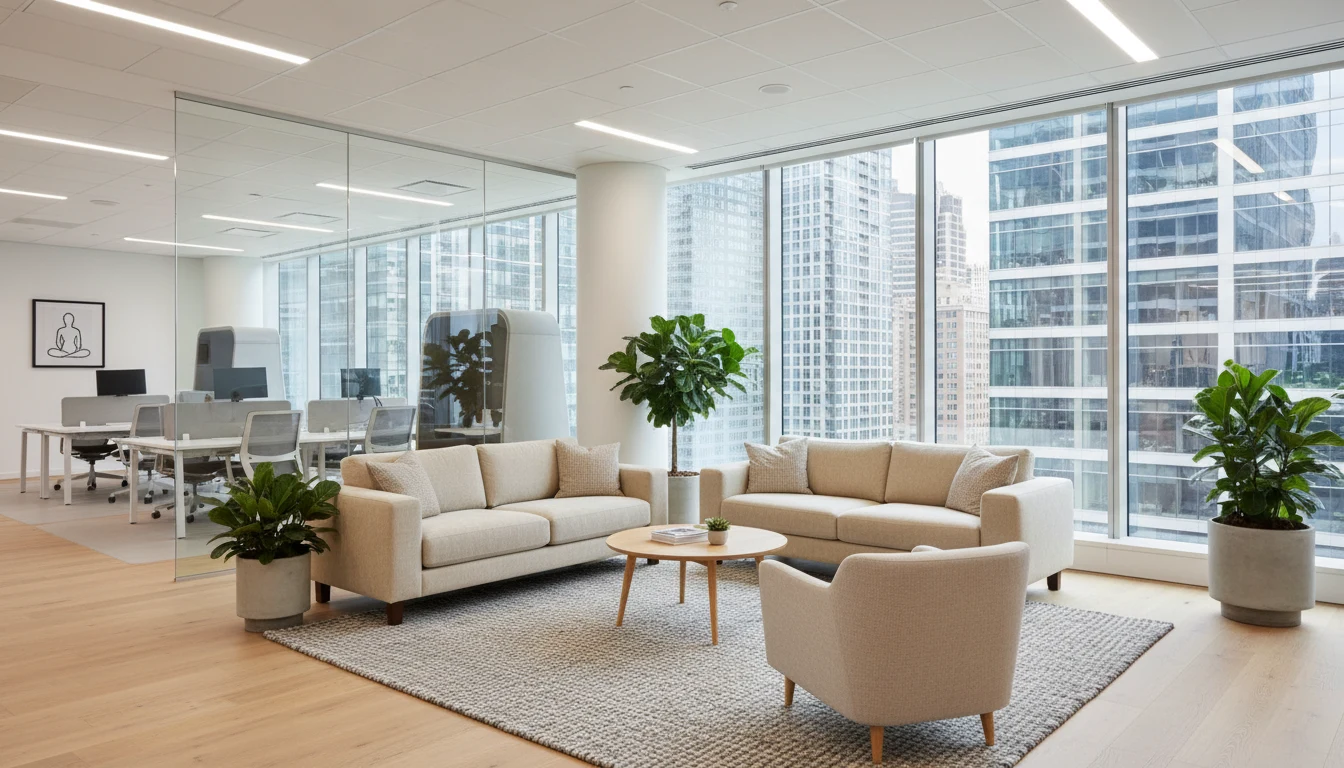
A break area is a space designed for taking a breath, not for working. People go there to pause, disconnect and let the pressure drop. A quiet corner, often thoughtfully arranged, where well-being comes first.
It can take the form of a lounge with comfortable armchairs, a reading or nap nook, a games area (table football, board games) or a room dedicated to meditation or yoga.
The goal? Offer an environment that invites relaxation. A place where employees recharge their mental batteries, away from pressure, noise and screens.
It is not a luxury but a concrete response to rising workplace stress, and a real lever for productivity and motivation.
How mental recovery works at the workplace
The brain, like a muscle, needs rest. Under constant demand, it tires. That mental fatigue weighs on focus, on performance and on health.
Mental recovery means regaining a good level of psychic energy. It happens through regular breaks, in a setting that invites calm and letting go.
During a real break, the heart rate slows, the brain shifts into rest mode, physical tensions ease and thoughts settle.
A well-designed break space helps trigger those mechanisms. It supports the management of mental load and reinforces the balance between demand and recovery.
A simple tool for boosting engagement and mental health across teams, without lengthy speeches, just with a touch of thoughtful design in the workplace.
The concrete benefits of a break area for well-being and mental health
Lower stress and burnout prevention
A break area gives people room to breathe. A few minutes in a quiet place can make a difference, with less tension, less mental fatigue and pressure that starts to drop.
Chronic stress is a real issue and can lead to burnout. Offering a place to sit down is offering a safety net, a form of concrete support for employees.
A thoughtful space encourages regular guilt-free breaks, supports a healthier management of time and energy, and sets an atmosphere that invites relaxation.
Better mood and higher job satisfaction
When people feel good, they work better. A break area lifts the mood and creates a more positive climate that shows up in how colleagues talk to each other.
Sharing break moments builds stronger ties. People chat, laugh and unwind. Motivation and engagement rise, the atmosphere becomes lighter and more human.
The effects are clear: fewer stress-related absences, steadier performance over time and a better balance between work and personal life.
A small investment for a big return. A simple resource to support mental recovery and the health of your teams.
What impact on team productivity and performance?
Supporting focus and creativity
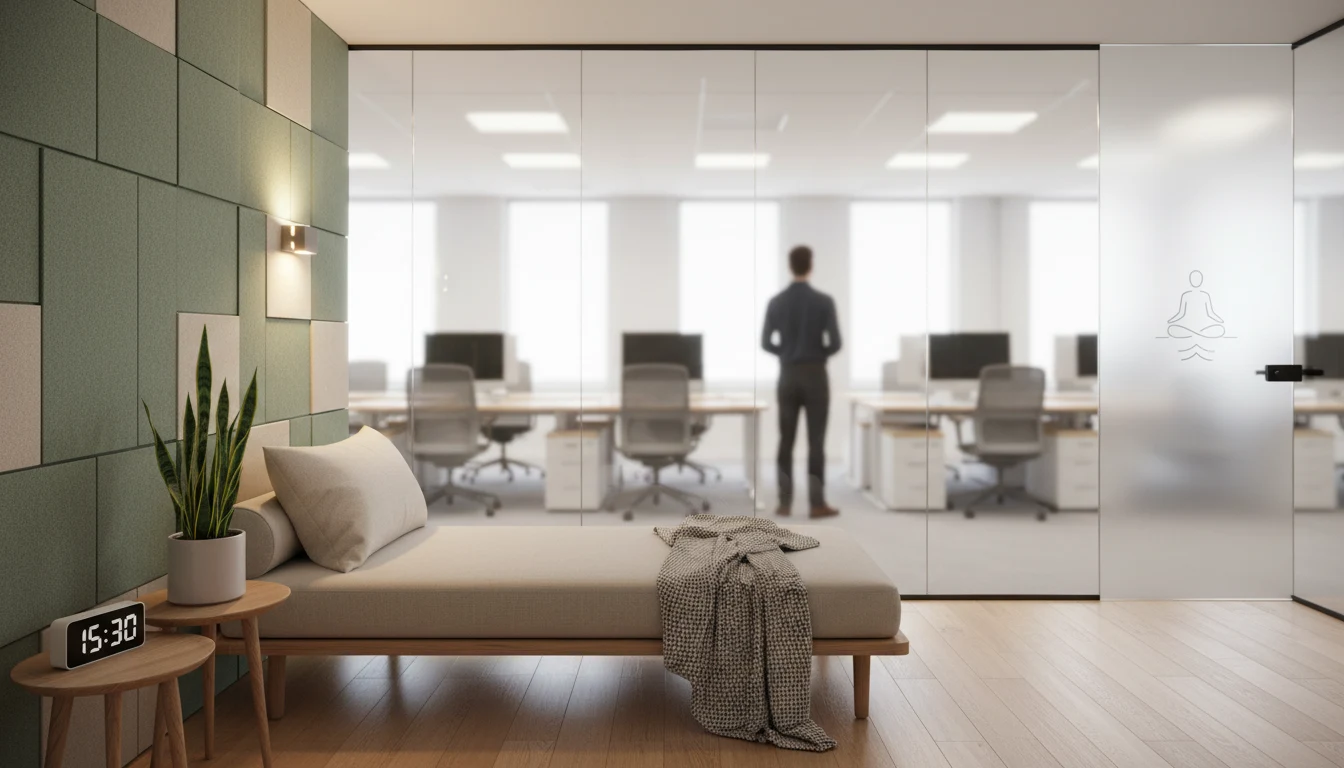
A well-designed break area lets employees take a real pause. The mind breathes, pressure drops, focus returns.
After a stressful environment, the brain goes back to thinking freely. That is where ideas come from. Creativity comes back more easily after a moment of calm, away from screens and constant notifications.
A room with comfortable armchairs, soft lighting and a few plants is often enough. A simple but powerful tool to boost performance.
A setting that supports mental recovery also helps manage priorities, with fewer mistakes, more pace and better-quality work.
Fewer absences and lower turnover
When a company looks after its teams’ well-being, it shows. Employees feel heard and supported. Less stress means fewer sick days and fewer burnouts.
A rest or relaxation space lowers tensions and sends a clear message: here, the balance between work and recovery is respected. Motivation and engagement grow with it.
The result, fewer absences and fewer departures. People stay because they feel good. And a stable team is a more effective team.
You also see less chronic fatigue, fewer internal conflicts and better communication between colleagues.
A simple break corner can therefore have a direct impact on mental health and on the company’s overall performance.
How to design a break area that fits your team’s needs?
Identifying employee expectations and preferences
Before thinking about design or furniture, start by listening to your teams. Every company is different. What works elsewhere won’t necessarily suit yours.
Run a quick survey or informal conversations. Ask what kind of activities help them unwind, whether they prefer a quiet or lively space, and when during the day they would like to use it. As an expert in professional office fit-out in Geneva, Class Orga guides you toward the right solutions for a thoughtful break area.
Some employees will need silence to reset. Others will prefer a spot to chat and unwind. Understanding these needs is how you create a space that truly supports their mental recovery.
Key elements of a successful setup (furniture, atmosphere, accessibility)
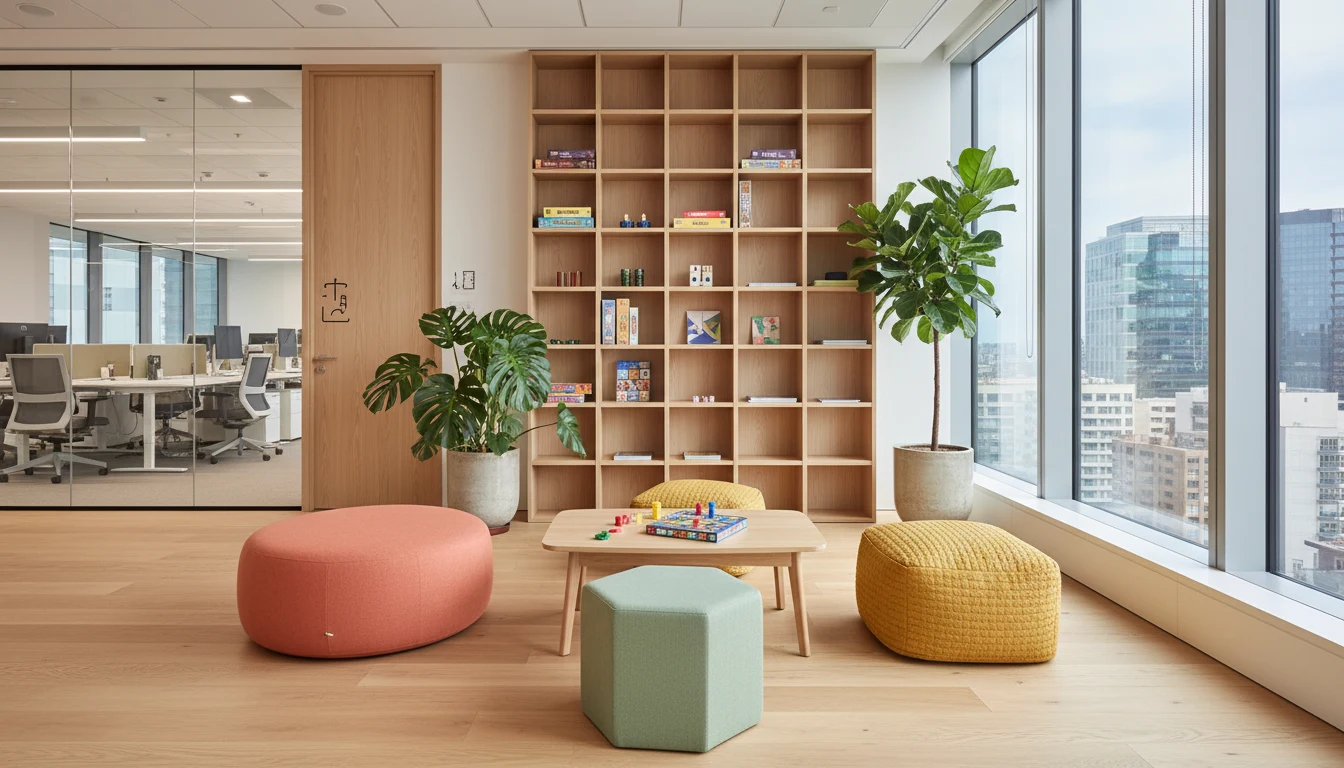
A good break area does not require a big budget. It does need to follow a few simple principles to support well-being and relaxation.
Furniture should be comfortable: armchairs, poufs, sofas or hammocks. The atmosphere should be soothing: soft lighting, plants, neutral colours. The space should remain easy to reach, without logistical friction.
Add elements that encourage disconnection: books, board games, gentle music, even meditation corners or nap pods.
The more the space is shaped around your teams’ real needs, the more it becomes a lever for motivation and performance.