You live in Geneva, you own a historic building and you would like to cut your energy bills while preserving its historic charm? Did you know that older buildings can waste up to 40% of their energy because of poor insulation? The Cantonal Building Energy Certificate (CECB) is designed to help you pinpoint the energy upgrades best suited to your property. In this article, find out how to effectively insulate your historic building according to the CECB standards in Geneva, to gain comfort, save money and add value to your property.
What is the CECB and why is it essential to insulate a historic building in Geneva?
Definition and objectives of the Cantonal Building Energy Certificate (CECB)
The Cantonal Building Energy Certificate (CECB) is an official Swiss document that assesses a building’s energy performance. It indicates energy consumption and CO₂ emissions, making it possible to spot weaknesses and propose concrete solutions to improve thermal efficiency.
The main goals of the CECB are to precisely assess a building’s energy consumption, identify possible improvements for insulation, heating or ventilation, encourage owners to undertake effective energy renovations, and reduce environmental impact by limiting greenhouse gas emissions.
The specifics of the CECB in Geneva for historic buildings
In Geneva, the CECB takes into account the specifics of historic buildings, which are often less efficient thermally. It considers architectural and heritage constraints and provides recommendations suited to traditional materials such as stone or wood. It also provides specific solutions for thermal insulation of walls, attics and façades, proposes glazing upgrades that respect the original look, and recommends the integration of renewable energy sources where possible.
For example, for an older house in Geneva, the CECB will often recommend internal rather than external insulation, to preserve the historic façade while improving energy performance. Class Orga handles the energy compliance of buildings in Geneva and delivers your CECB / CECB+ assessment report upfront.
What thermal regulations apply when renovating a historic building in Geneva?
Cantonal standards and legal obligations for thermal insulation
In Geneva, thermal regulations set clear standards for the energy renovation of historic buildings in order to improve their thermal efficiency. When carrying out façade works, you must:
- meet minimum thermal insulation values,
- use materials that comply with cantonal performance and durability criteria,
- insulate roofs and façades whenever major renovations are carried out,
- respect the energy consumption limits set by the canton,
- install high-performing heating systems or ones that use renewable energy.
Upgrading window glazing is also required to limit heat loss.
The impact of the CECB on energy renovations of historic buildings
A prior energy audit is often required, to identify weak points in thermal insulation, propose improvements suited to the historic building and estimate potential savings in energy and costs. Thanks to the CECB, the necessary works are clearly defined and allow an effective renovation while respecting cantonal standards.
What are the concrete steps to effectively insulate a historic building according to the CECB?
Carrying out a CECB®Plus energy audit suited to your building
The first essential step to insulate a historic building in Geneva is to carry out a CECB®Plus energy audit. This audit, performed by a certified expert such as Class Orga, clearly diagnoses current energy consumption, identifies weak points and provides precise recommendations to improve thermal insulation, while estimating potential savings on your energy bills.
Identifying priority areas to insulate in a historic building
Once the audit is done, you can target the priority areas to insulate. These usually include external walls and façades, attic and roof, windows and glazing, as well as lower floors in contact with unheated spaces. For instance, walls that feel cold to the touch in winter point to poor insulation. Targeting these areas yields significant savings.
The choice of insulating materials is a key step. For historic buildings, favour materials compatible with the existing architecture, eco-friendly and durable, such as mineral wool, wood fibre, hemp or cellulose wadding. Make sure these materials meet CECB standards for thermal performance and durability. Your CECB expert can guide you effectively.
How to preserve the historic character of your building during thermal insulation?
Insulation solutions compatible with historic buildings in Geneva
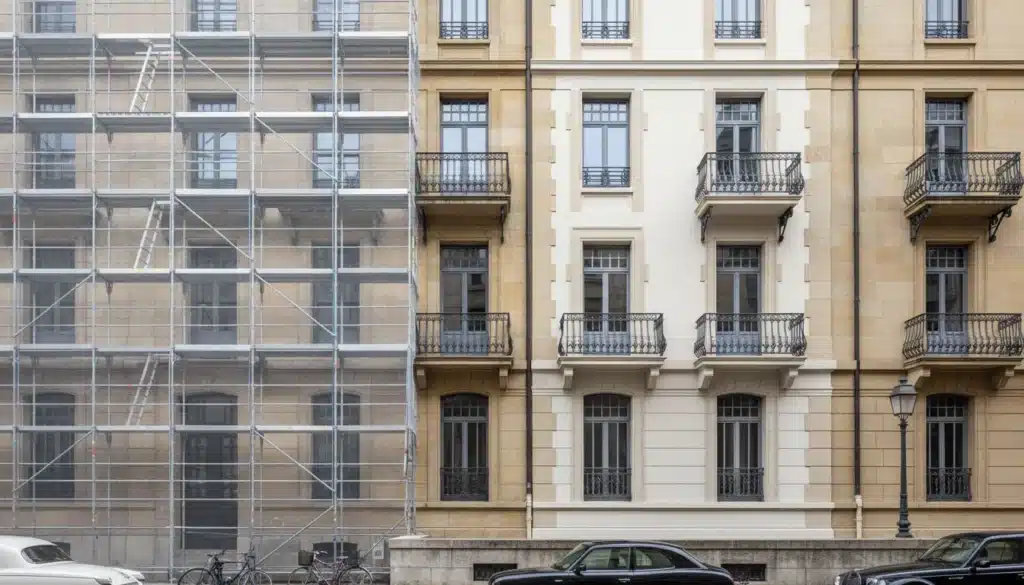
During an energy renovation, preserving the historic character is essential. The CECB in Geneva often recommends internal thermal insulation to keep the external façade intact, lightweight external insulation using a thin insulating render that respects the original appearance, or the installation of discreet high-performing glazing that improves thermal efficiency while preserving the original look.
Best practices and recommendations to preserve architectural authenticity
To maintain the architectural authenticity of your historic building, first commission an audit by a heritage specialist. Choose reversible insulation techniques that can be removed without damage, favour natural materials compatible with older construction methods, and check local heritage preservation regulations before starting works.
What budget should you plan to insulate a historic building according to CECB standards in Geneva?
The budget mostly depends on the methods and materials chosen. Here is an indicative comparison table of the average costs commonly seen in Geneva:
Insulation method
Average cost per m² (CHF)*
External façade insulation
250 to 500 CHF
Internal wall insulation
200 to 400 CHF
Attic insulation
80 to 200 CHF
*This information is provided for guidance only, without commitment.
These costs vary depending on the materials used, the surface area and the complexity of the works. Geneva also offers financial support such as the Buildings Programme (thermal insulation of façades, roofs, floors), Eco21 (replacement of heating systems with renewable energy) and tax reductions. An energy audit by a CECB-certified expert is often required to access this support.
What are the long-term benefits of CECB-compliant insulation for a historic building in Geneva?
Insulating a historic building in line with the CECB in Geneva brings many long-term benefits:
- significant financial savings thanks to lower energy consumption,
- noticeable improvement in thermal comfort,
- higher property value thanks to a recognised energy certification,
- a smaller carbon footprint and a contribution to preserving the environment,
- better building durability by avoiding condensation and mould,
- easier compatibility with renewable energy sources such as solar panels or heat pumps.