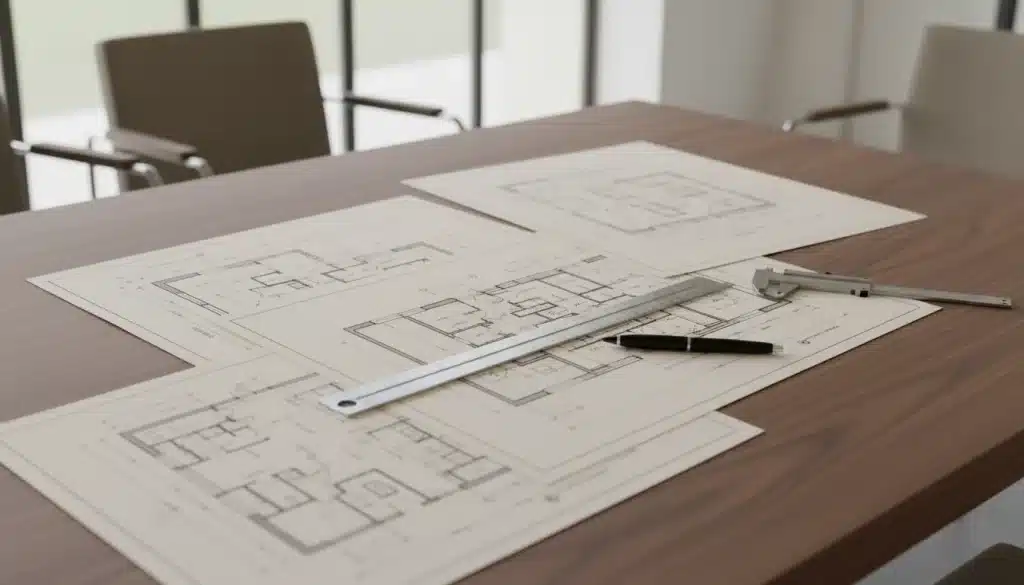
In a company, the meeting room is a strategic area whose importance cannot be overlooked. Generally used for team check-ins, training sessions, committees or conferences, it is a room that welcomes employees, partners and clients. As a result, the company’s image is at stake, and so is your teams’ productivity. It’s therefore important that it is properly equipped and laid out to save space and provide good working comfort.
Which type of layout for which meeting room?
How did you design the layout of your meeting rooms? Before starting, it’s important to clearly define your teams’ needs. To each meeting room, its use. The layout of a meeting room will vary greatly depending on whether it hosts job interviews, brainstorming sessions or conferences. The surface, the type of furniture or the equipment will also be affected. If you have little space and only one or two meeting rooms for the whole company, you’ll need to opt for a modular meeting room. In that case, you’ll need to make sure the elements inside the meeting room can easily be moved.
Which setup for saving space?
As you’ll have understood, two factors strongly shape the layout of your meeting room: the room’s surface and the type of collective work carried out inside. This information helps ensure participants’ comfort and support exchanges.
However, as a general rule, the minimum space taken up by a seated person is 60 cm. If it’s necessary to take notes, consult documents or use a computer during the meeting, you should then allow a minimum distance of 70 to 80 cm per participant.
These factors help determine the number of seated people (and therefore the number of chairs) that can stay around a table. In addition, for good circulation in the room, having about 1 m between the table and the walls is a good start.
How to lay out your meeting space?
The layout of a meeting room shouldn’t be left to chance. The setup will be a thoughtful compromise between the available space, the required setup and the meeting room’s purpose.
You can choose a rectangular, oval, round, U-shaped or L-shaped meeting table and place it in the centre of the room (or slightly to one side, depending on the possible setups). You will then be able to calculate your room’s hosting capacity based on the measurements you’ve taken.
When it comes to equipment, you’ll have the freedom to place power sockets or Ethernet cables in strategic spots. You’ll also need to know how you want to project your presentations, via video projectors or on a TV screen. It’s also wise to plan HDMI cable connections so every team member can share their screen from their seat. For video calls, it will be important to plan where the webcam and microphone go, then arrange the chairs so everyone can be heard.
Don’t overlook participants’ comfort either, by choosing padded chairs with armrests. The lighting should also be carefully chosen. Favour spotlights on the “front of the stage” for training sessions and conferences. Rather than going for a uniform lighting during brainstorming sessions.
But there’s more…
To wrap up, we insist on an essential point that will determine the success of your meeting rooms. It’s acoustics! To ensure the confidentiality of exchanges and the peace of the neighbouring colleagues, sound management must be optimal. You shouldn’t cut corners on the quality of the partitions that surround the meeting room. The choice of doors is key, because it’s through them that sound travels most. Just as the floor covering and the type of suspended ceiling play an essential role in how sound waves spread. A good meeting room is above all a room where people can speak freely without disturbing the rest of the company.